Monthly Archives :

January 2019

Instrumento del proyecto Delyramus
DELYRAMUS, a project at European level
DELYRAMUS, a project at European level 640 427 v1rtu@l

The Rey Ardid Foundation in Saragossa will coordinate the Delyramus project that works for the inclusion of people with disabilities or at risk of social exclusion.

This project aims at social integration through culture and the recovery of cultural heritage, and has been possible thanks to the funding of the Creative Europe program.

Other European associations have joined this project, such as:

From the Aragonese capital, one of the main activities will focus on the recovery of 14 medieval instruments.

Read the whole news: eldiario.es

Usuario tocando el Ratratanta
Ratatranta, the musical instrument created by the Rey Ardid Foundation and the School of Violeros of Saragossa
Ratatranta, the musical instrument created by the Rey Ardid Foundation and the School of Violeros of Saragossa 640 427 v1rtu@l

Ratatranta arises from the idea of creating a totally inclusive instrument, and be enjoyed even by people with hearing disabilities. Its design allows people to fall on the wooden structure, which is the sounding board, and be played through strings on the sides. The vibrations of the strings can be felt throughout the body leading the person to a state of meditation and relaxation.

Two years have gone by in its creation and, in the project, fifty mental health users of the Rey Ardid Foundation have participated with the supervision of the School of Violeros of Saragossa.

Its design is based on instruments created in the s. XV., Time in which the city of Saragossa was a pioneer in the development of instruments at European level.

Read the whole news: El Heraldo

Director del programa Delyramus en Zaragoza
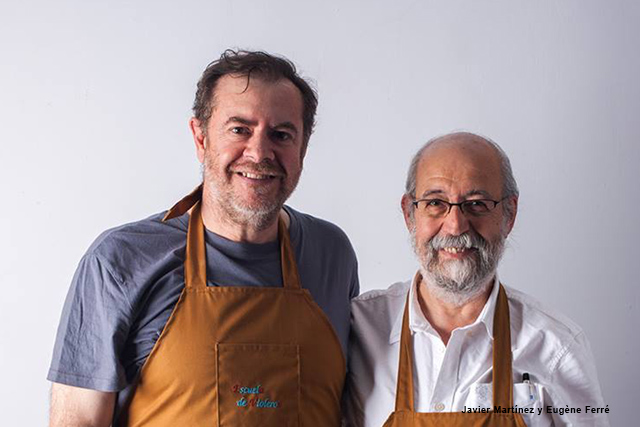
Javier Martínez, director of the School of Violeros of Zaragoza, talks about the Delyramus project
Javier Martínez, director of the School of Violeros of Zaragoza, talks about the Delyramus project 640 427 v1rtu@l

The Delyramus project wants to recover 14 extinct instruments of which reference is made thanks to paintings made at the end of the 19th century. XV and early XVI. The work will be carried out manually and maintaining the manufacturing processes of the time. In this project, 16 students from different parts of the world and various degrees of specialization will collaborate.

The objective is to achieve the integration of people with disabilities or at risk of exclusion from the cultural heritage of violeros that the city of Zaragoza had during the s. XV.

Read the interview: El Periódico de Aragón